

Tankless vs tank water heater: which is worth it?
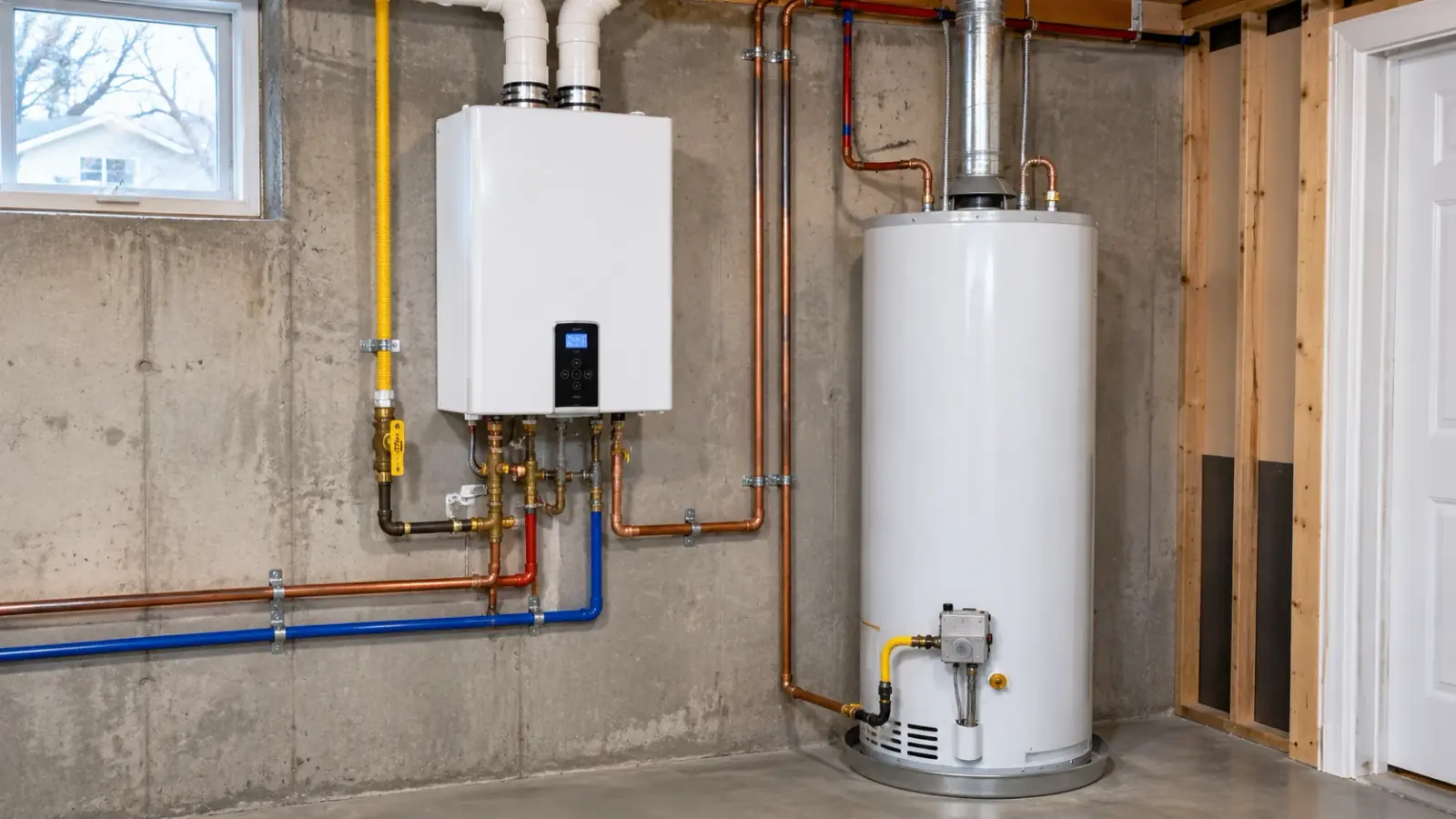
Tank and tankless side by side
| Tank (storage) | Tankless (on demand) | |
|---|---|---|
| Installed, gas | $1,700 | $3,900 replacing a tank; $2,850 replacing a tankless |
| Installed, electric | $1,400 | $3,000 replacing a tank |
| How long it lasts | 10 to 15 years | About 20 years |
| Energy use | Keeps a tank hot all day | Heats water only when a tap runs: 5% to 40% lower energy cost |
| Hot water | Can run out after long showers, then refills | Never runs out, but only so much flow at once |
| Space | A tank on the floor | A box on the wall |
Prices from our calculators at national averages for a 50-gallon tank in an easy spot. Lifespans and savings from ENERGY STAR and the Department of Energy’s Building America Solution Center.
Why switching to tankless costs more than you expect
The tankless unit itself isn’t the whole bill. A tankless gas heater burns far more gas while it runs: typical burners are 120,000 to 200,000 Btu an hour against 30,000 to 50,000 for a tank. So switching often needs:
- A larger gas line, because the old one may not carry enough gas for the new burner and your other gas appliances.
- New venting, usually out through a side wall, and a drain for the condensate on high-efficiency models.
- Re-piping and a new mounting spot on the wall.
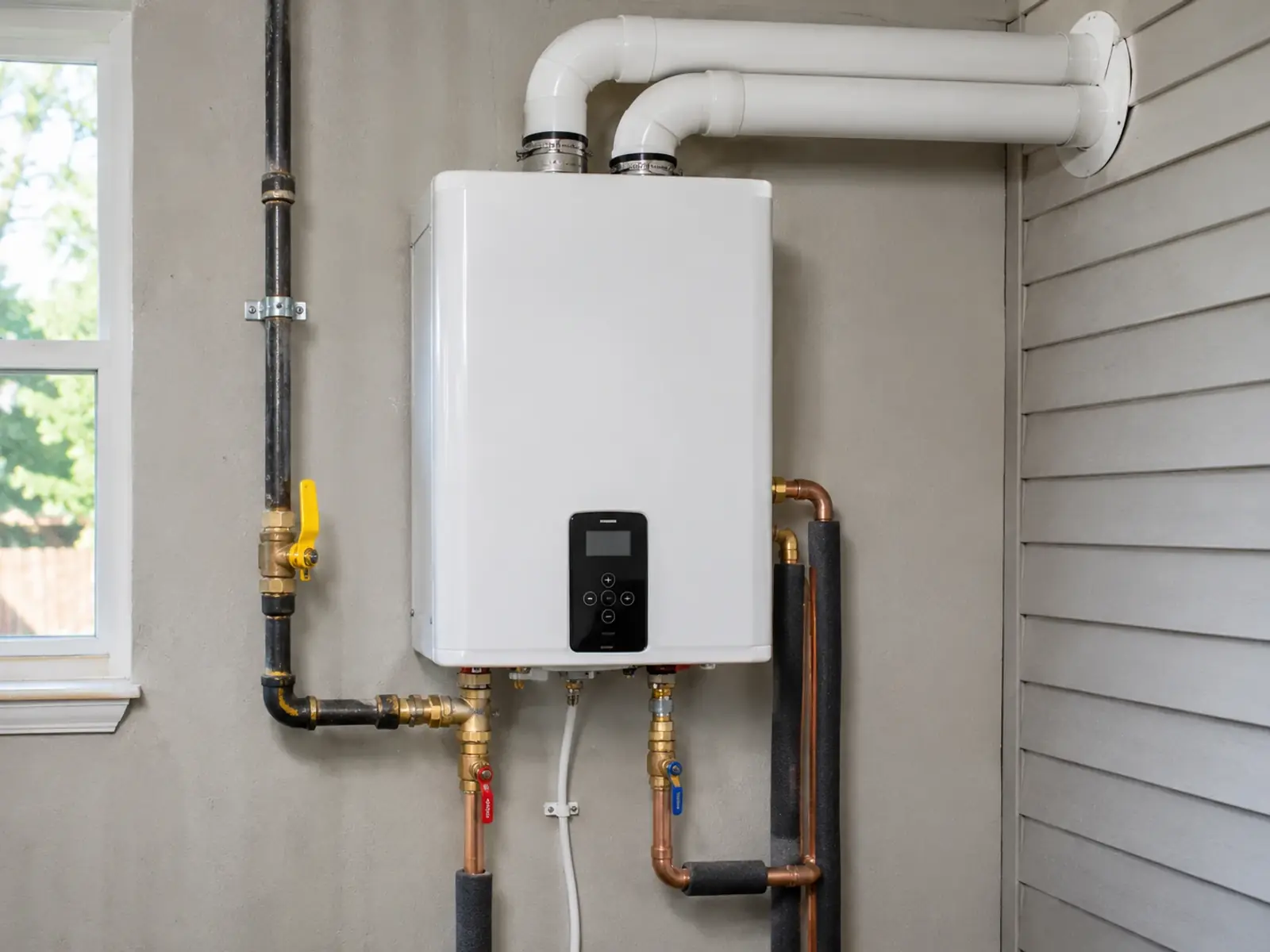
That’s why our calculator prices a gas tankless at about $2,850 when it replaces another tankless, but about $3,900 when it replaces a tank. See the breakdown in the tankless water heater calculator.
Does tankless pay for itself? A 20-year example
Take a family of four replacing a gas tank, and compare 20 years of each choice, before inflation:
- Tank: a new tank now ($1,700) and, since tanks last 10 to 15 years, another one along the way: about $3,400.
- Tankless: one high-efficiency (condensing) gas tankless, the kind ENERGY STAR certifies ($3,900), less ENERGY STAR’s estimate of $1,800 saved on gas over its life: about $2,100.
Over 20 years the tankless comes out about $1,300 ahead. On gas savings alone, though, the extra $2,200 up front takes about 23 years to earn back. So tankless makes most sense if you plan to stay, your tank is due for replacing anyway, and you value never running out of hot water. If you might move in a few years, a tank is the cheaper choice.
This is a worked example, not a quote: your gas price, how much hot water you use and the work your house needs all change it.
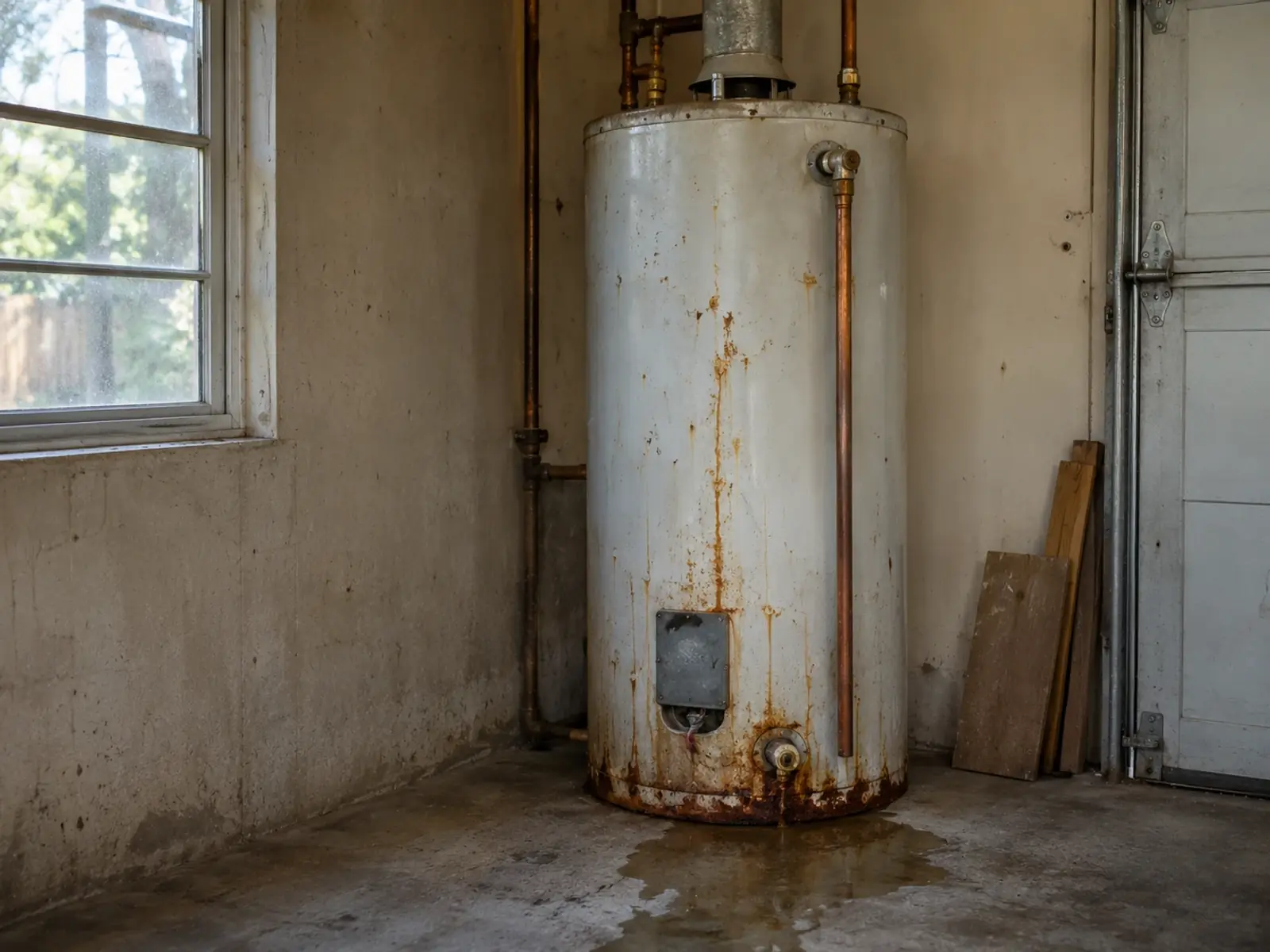
When a tank is the better choice
- You only have electricity. Whole-house electric tankless units need large circuits, and sometimes a panel upgrade. Where there’s no gas, the Department of Energy’s Building America guidance suggests a heat pump water heater instead; our calculator puts one at about $3,400 replacing an electric tank.
- Several big draws at once. Two showers, the washer and the dishwasher together can exceed what one tankless unit delivers, and the water won’t be as hot.
- Budget now matters more than savings later.
Sizing a tankless heater
Tankless heaters are sized by flow, not gallons. Add up the hot water you might draw at the same time (a shower and the kitchen tap, say) in gallons per minute, then find how much the water must be heated: from your cold-water temperature to about 120°F. The Building America Solution Center’s example needs 4.5 gallons a minute with a 68°F rise in Seattle, where ground water is about 52°F. Check the maker’s flow chart against both numbers, and its minimum flow too: some units won’t switch on for a slow trickle at the sink.
Questions people ask
How long does a tankless water heater last?
About 20 years, according to ENERGY STAR and the Department of Energy’s Building America program, against 10 to 15 years for a tank.
Is a tankless water heater worth it for one or two people?
The savings come from not keeping a tank hot, so they don’t disappear in a small household, but the dollar amounts are smaller. Run your own numbers: the water heater calculator compares every type for your house and state.
Sources and method
- ENERGY STAR, Save more with ENERGY STAR gas tankless water heaters . Tankless life expectancy of 20 years; about $95 a year and $1,800 over its life saved by a family of four against a standard gas tank
- Building America Solution Center (Pacific Northwest National Laboratory, U.S. Department of Energy), Gas-fired tankless water heaters . Energy cost savings of 5% to 40%; installed cost 1.5 to 2 times a tank; up to 20 years against 10 to 15; burner sizes; sizing by flow rate and temperature rise
- NAHB / Bank of America Home Equity, Study of Life Expectancy of Home Components (February 2007) . Water heaters: electric 11 years, gas 10, tankless 20+
- Home Cost Estimates water heater and tankless water heater calculators . Installed prices: national averages, 50-gallon tanks, an easy location
Built by Engr. Zakir Ullah, an engineer and Google-certified data analyst. Full method: how we estimate. Last reviewed .