

Metal roof vs shingles: which costs less over time?
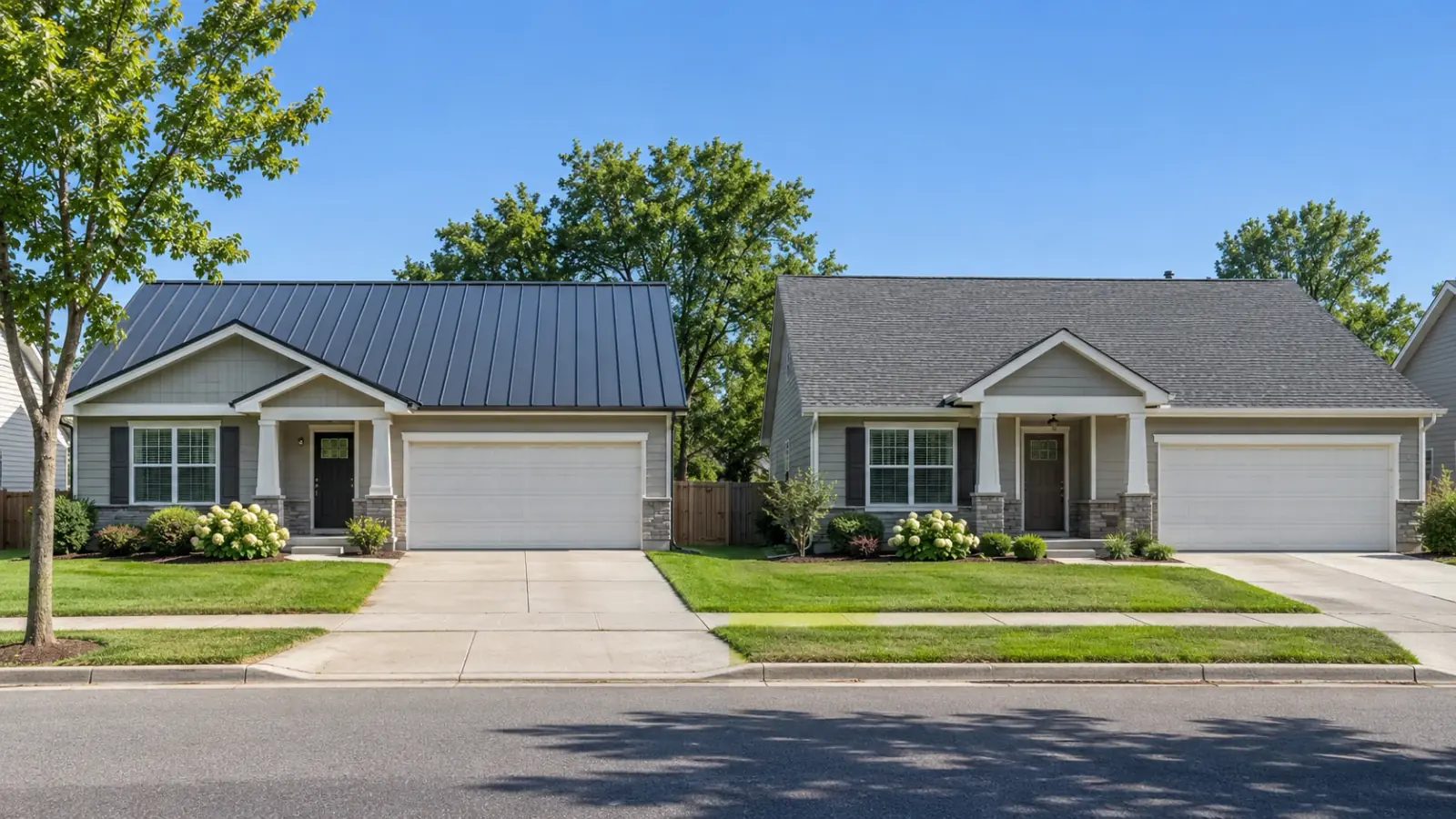
Metal and shingles side by side
| Architectural shingles | Exposed-fastener steel | Standing-seam steel | |
|---|---|---|---|
| Installed, 1,800 sq ft house | $10,800 | $15,300 | $27,800 |
| How long it lasts | 15 to 30 years | 20 to 30 years | 40 to 70 years |
| Cost per year of life | $480 | $610 | $510 |
| Upkeep | Replace lost or damaged shingles | Screws and washers need checking over the years | Little: no screws through the roof |
| Hail (IBHS test) | Impact-resistant shingles: mostly cosmetic marks, a few punctures | Not tested | Dents that show, but no punctures |
Prices and lifespans from our roof calculator at national averages, with one layer of old shingles torn off. The NAHB’s life expectancy study puts asphalt shingle roofs at about 20 years; the Metal Roofing Alliance, an industry group, says metal lasts 30 to 50 years or more.
What each roof costs over the years you stay
Metal’s case rests on not paying for a second roof. This table adds up every roof you’d buy to keep the house covered, in today’s prices: one now, then another each time the last reaches the middle of its expected life (22.5 years for architectural shingles, 25 for exposed-fastener panels, 55 for standing seam).
| Years you stay | Shingles | Exposed-fastener steel | Standing-seam steel |
|---|---|---|---|
| 10 years | $10,800 | $15,300 | $27,800 |
| 20 years | $10,800 | $15,300 | $27,800 |
| 30 years | $21,600 | $30,600 | $27,800 |
| 40 years | $21,600 | $30,600 | $27,800 |
Over 30 years you’d usually re-roof once with shingles, for about $21,600 in all, against $27,800 for one standing-seam roof. So even at 30 years shingles are still about $6,200 cheaper; standing seam pulls ahead around year 45, when you’d otherwise be buying your third shingle roof. Exposed-fastener panels cost less than standing seam up front, but they don’t last much longer than shingles, so over the years they cost the most of the three. Per year of life, shingles and standing seam are close ($480 against $510), so if a buyer one day pays you for the years left on a metal roof, the gap narrows.
This is a worked example, not a quote. It leaves out inflation, what the money saved up front could earn, and the value a newer roof adds when you sell. A roof can also fail early after a bad storm, or last well past the middle of its range.
Price your own roof in both: the metal roof calculator compares every metal type against shingles for your house and state, and the roof replacement calculator covers shingles and tile.
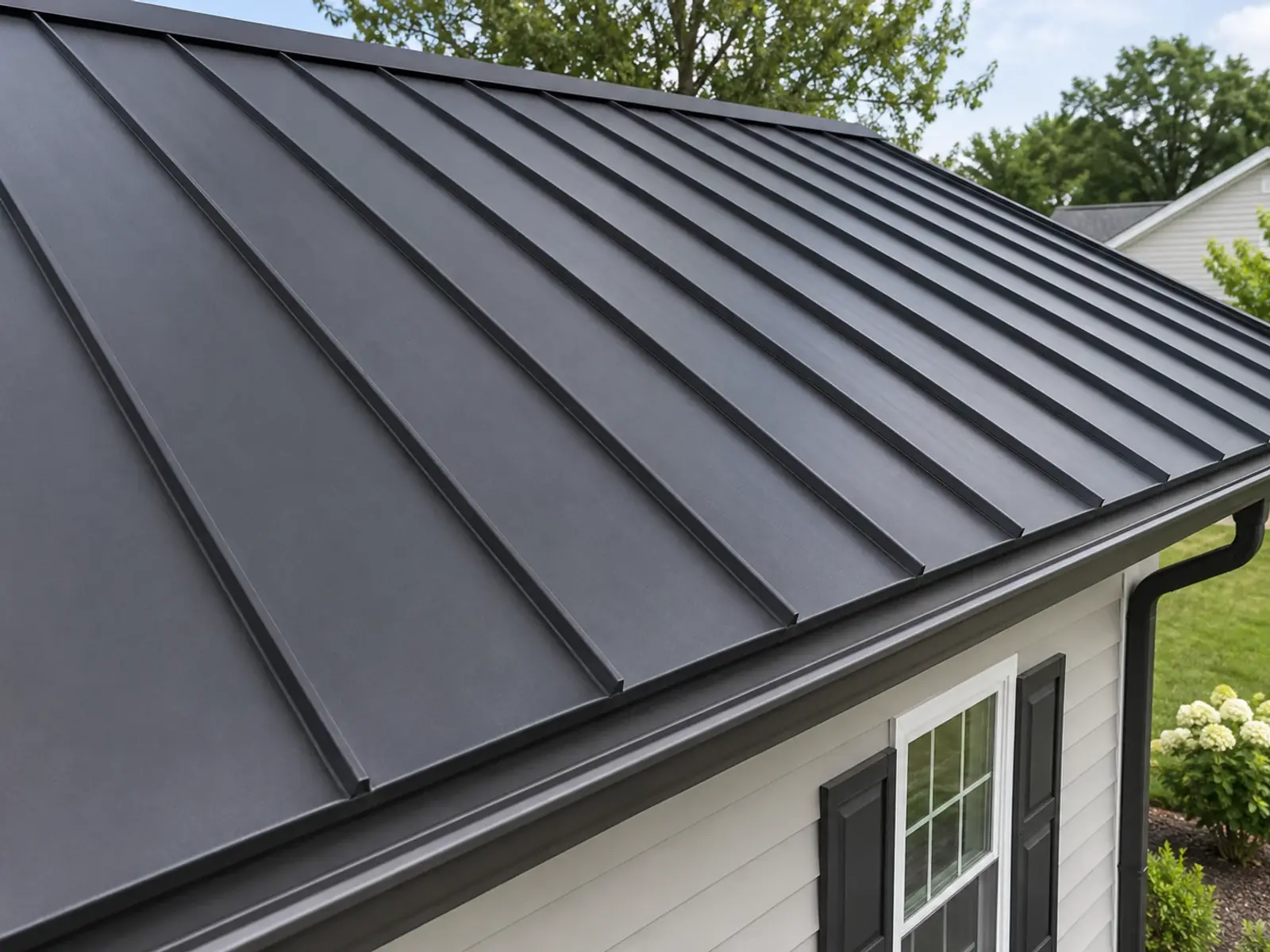
Standing seam or exposed-fastener metal?
“Metal roof” covers two very different jobs. Standing-seam panels lock together over hidden clips, so no screws go through the roof, and the panels can move as the metal heats and cools. Exposed-fastener panels (ribbed or corrugated) are screwed straight through, which makes them much cheaper and faster to put on, but the rubber washers under the screws age and need checking. If a quote for a “metal roof” looks close to the price of shingles, it is almost certainly exposed-fastener panels: ask which one you’re being offered.
Hail
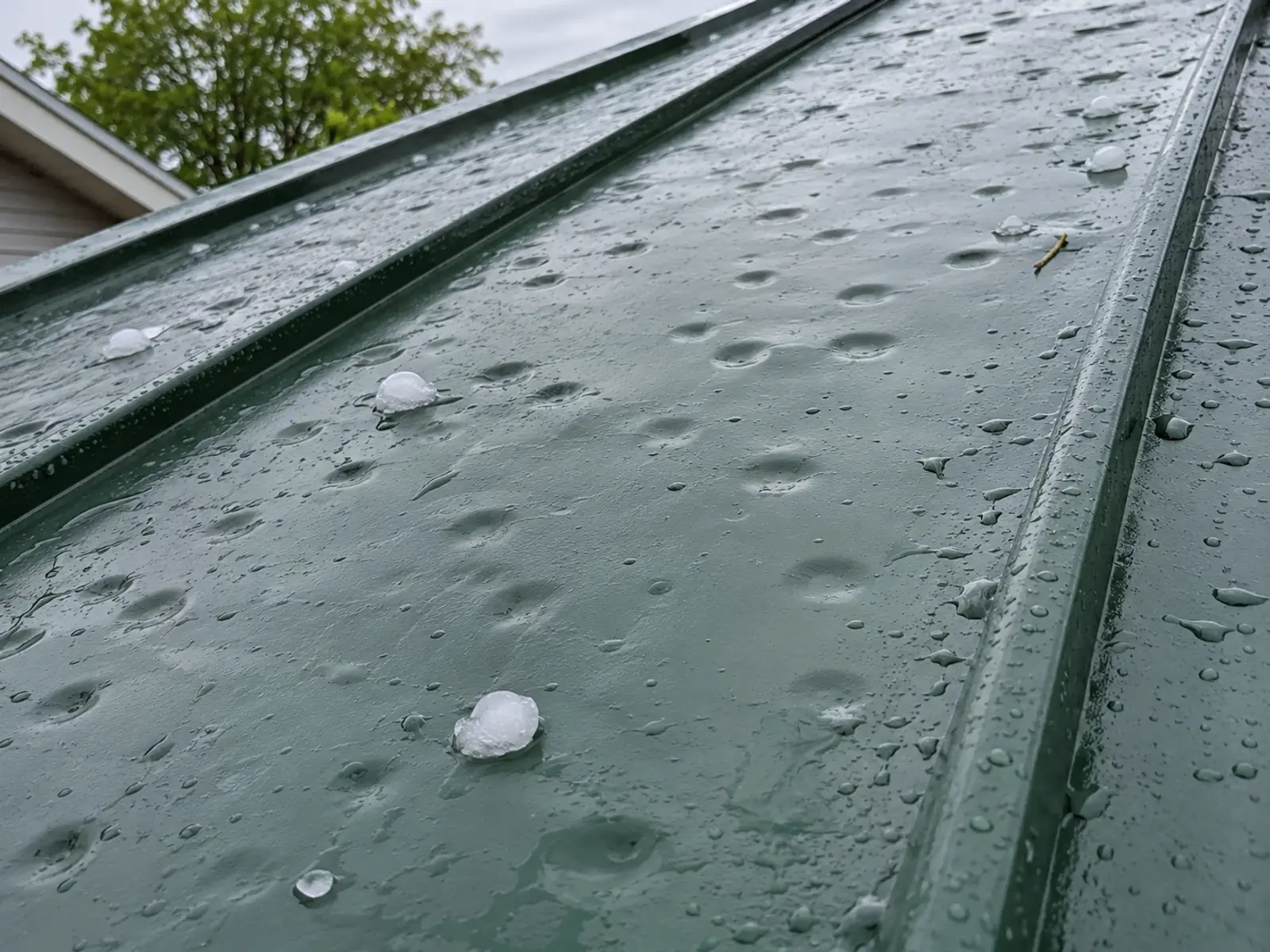
The Insurance Institute for Business & Home Safety (IBHS), a research group funded by insurers, fired more than 9,000 man-made hailstones of 1 to 2 inches at a test house in 2013. What it found:
- 3-tab shingles: most hits did real (functional) damage.
- Impact-resistant shingles: most hits left only cosmetic marks, but a few went through.
- Standing-seam steel: dents that were plain to see, but no punctures. Dents were larger and deeper where the metal had been laid over old shingles than over a bare roof deck.
IBHS called it a demonstration rather than a full study, so treat it as a guide, not proof. If you live where hail is common, ask your insurer whether your policy pays for dents on a metal roof that don’t let water in.
Noise, heat and energy
- Rain noise. Metal laid over a solid roof deck and underlayment, as on most houses, isn’t much louder than shingles. The Metal Roofing Alliance, an industry group, says there is little difference in noise from rain or hail.
- Heat. How hot a roof gets depends on how much sunlight its surface reflects and how well it sheds heat, according to the Lawrence Berkeley National Laboratory’s Heat Island Group, not on whether it’s metal. A dark roof of any material soaks up sun; a light or “cool” finish reflects it.
- Energy savings. The Metal Roofing Alliance says metal can save 10% to 40% on energy costs. That is an industry figure, we haven’t found an independent study that backs it for houses, and most of any saving comes from the finish’s color, so treat it with care.
Which to choose
Shingles usually make more sense if:
- you may move within the next few decades: on our numbers shingles stay cheaper until about year 45;
- the budget now matters more than the cost over decades.
Metal usually makes more sense if:
- this is the house you’ll keep, for 45 years or more on our numbers;
- you get heavy snow or wildfire risk (the Metal Roofing Alliance points to metal shedding snow and resisting embers), or frequent hail and can live with dents that don’t leak;
- you want a roof you rarely have to think about.
Questions people ask
How much more does a metal roof cost than shingles?
In our calculator, standing-seam steel costs about 2.6 times as much as architectural shingles on the same house ($27,800 against $10,800 for 1,800 sq ft at national averages). The Metal Roofing Alliance gives a similar range: about two to three times an asphalt roof. Exposed-fastener panels cost much less, about $15,300 here.
Can a metal roof go over shingles?
Often, if your local code allows it and there’s only one layer of shingles. It saves the tear-off, but it hides the deck underneath, and in the IBHS hail test the metal laid over shingles took larger, deeper dents than metal on a bare deck. Ask your building department and the panel maker first.
Does a metal roof make a house hotter?
Not because it’s metal. The color and finish decide how much sun a roof absorbs; a light or reflective finish keeps a roof cooler than dark shingles.
Sources and method
- NAHB / Bank of America Home Equity, Study of Life Expectancy of Home Components (February 2007) . Asphalt shingle roofs: about 20 years
- Metal Roofing Alliance, frequently asked questions . Industry group: metal roofs cost about two to three times an asphalt roof and last 30 to 50+ years; little difference in rain noise; sheds snow and resists embers; 10% to 40% energy savings (its own claim)
- Insurance Institute for Business & Home Safety (IBHS), Hailstorm Demonstration Results (February 2013) . 1 to 2 inch hail on 3-tab shingles, impact-resistant shingles, and standing-seam metal over a deck and over shingles
- Lawrence Berkeley National Laboratory, Heat Island Group: Cool roofs . A roof stays cool by reflecting sunlight and giving off heat; dark roofs absorb sunlight
- Home Cost Estimates roof replacement and metal roof calculators . Installed prices and lifespan ranges; national averages, 1,800 sq ft single-story house, one layer torn off
Built by Engr. Zakir Ullah, an engineer and Google-certified data analyst. Full method: how we estimate. Last reviewed .