

Roof repair vs replacement: how to decide
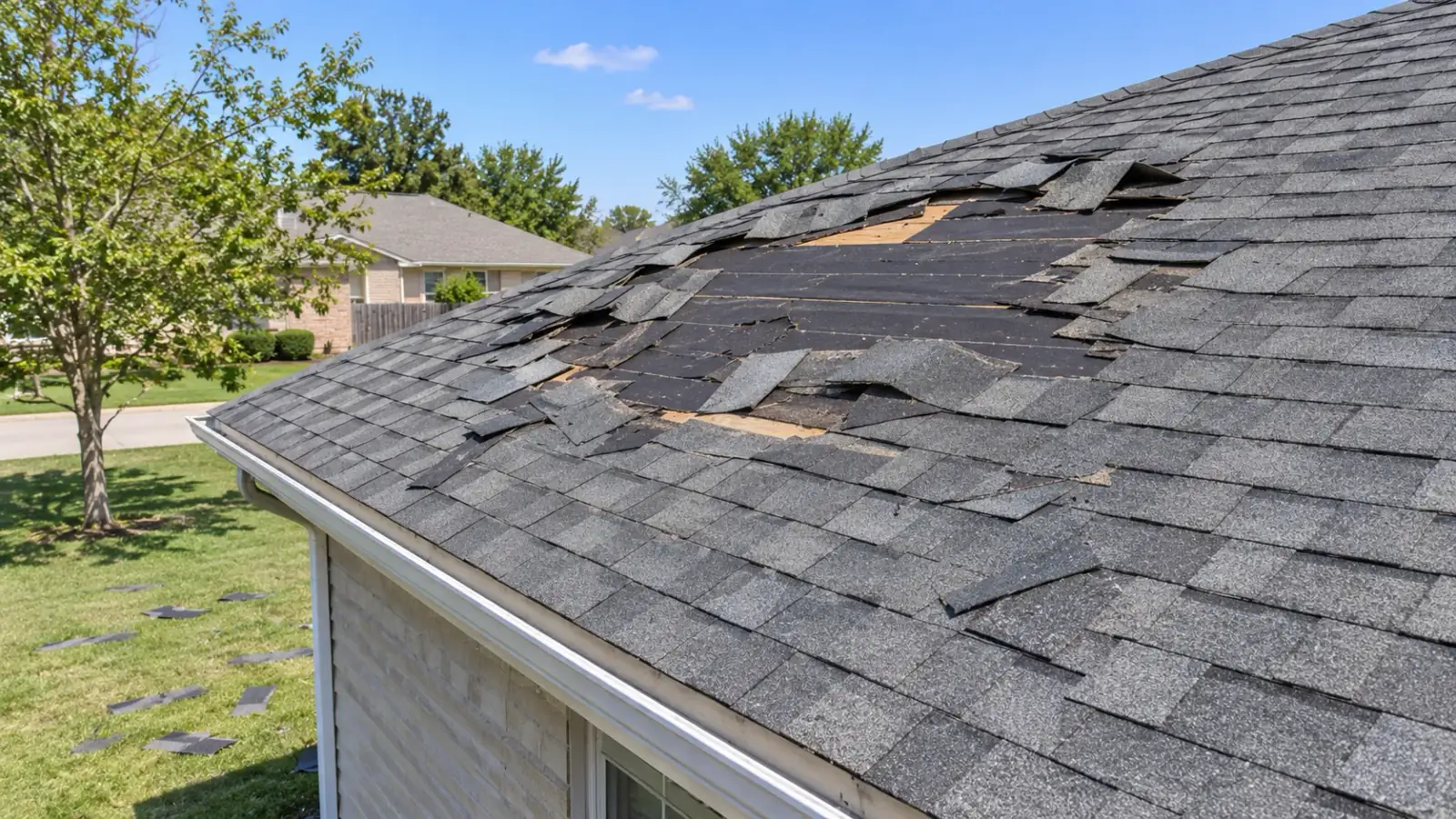
Start with the roof’s age
The National Association of Home Builders puts the life of an asphalt shingle roof at about 20 years. A repair buys the most on a young roof: fixing a leak on a 7-year-old roof protects many years of roof you’ve already paid for. On a roof near or past 20 years, the same repair may only buy a year or two before the next one. Our guide how long does a roof last covers every material.
What common repairs cost
Each price below is a single repair on its own, including the roofer’s trip and time to find the leak, with how it compares with a new roof on the same house:
| Repair | Typical cost | Share of a new roof |
|---|---|---|
| Replace a cracked pipe boot | $370 | 3% |
| Reseal or replace flashing at one spot | $580 | 5% |
| Replace a patch of damaged shingles | $420 | 4% |
| Repair 10 ft of valley | $580 | 5% |
| Replace 3 sheets of rotten decking | $940 | 9% |
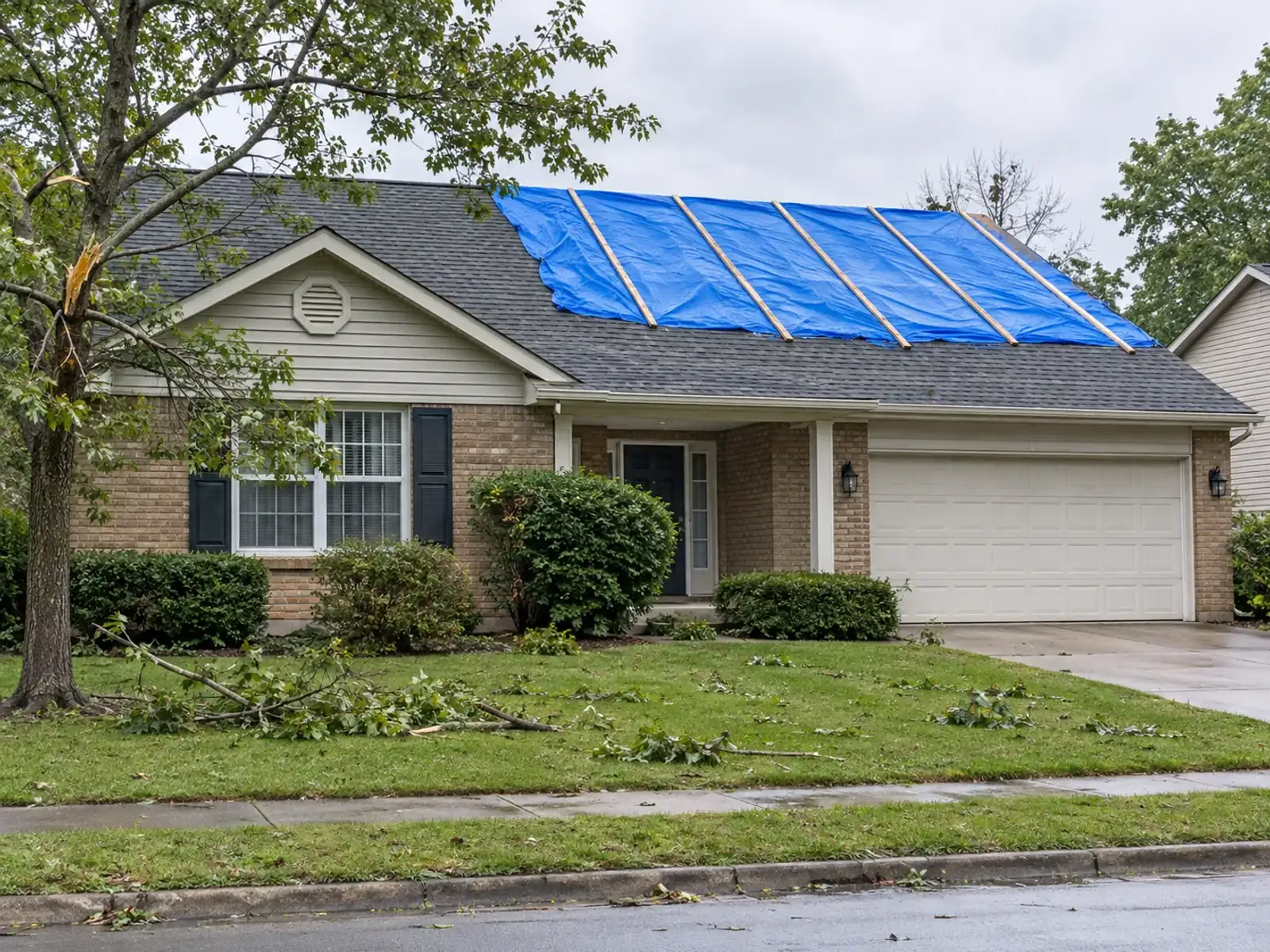
| Emergency tarp after a storm | $470 | 4% |
| New architectural shingle roof | $10,800 | 100% |
Our calculators at national averages for a single-story asphalt shingle roof. Two-story and steep roofs cost more to work on.
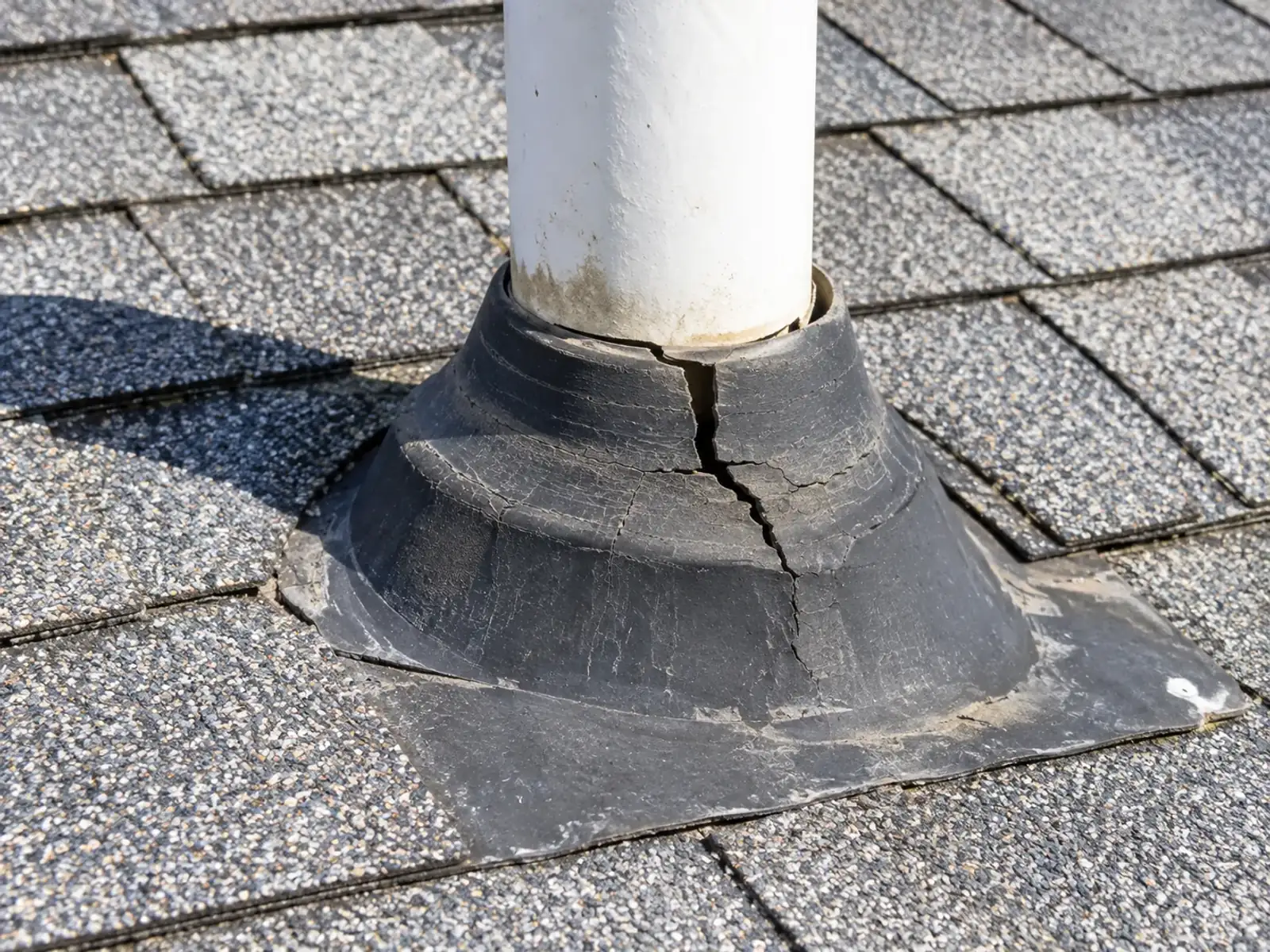
When repairs add up
A bigger storm repair, with ten shingle patches, two valley runs, four sheets of decking, three flashing spots and some ridge cap, comes to about $4,550 in our calculator: 42% of a new roof. That’s still often worth doing on a roof with plenty of life left. On a roof that’s already 15 to 20 years old, it’s money spent on a roof you’ll soon replace anyway.
Our rule of thumb (a judgment, not an industry standard): when a roof is past the middle of its life and the repair quote comes to more than about a quarter of a new roof, get a replacement quote too and compare. Price both for your own house and state with the roof repair calculator and the roof replacement calculator.
Signs it’s time to replace, not repair
- The roof is near or past its expected life, about 20 years for asphalt shingles.
- Damage is spread out: curling, cracked or missing shingles across the roof, or granules piling up in the gutters, not one damaged spot.
- The deck is soft or sagging, which means water has been getting in for a while.
- Leaks keep coming back in different places after repairs.
- You’re facing a big repair on a roof that would need replacing within a few years anyway.
Can a new roof go over the old one?
A “roof-over” (a new layer laid on top of the old shingles) skips the tear-off and costs less. But the International Residential Code, which most states and towns base their building codes on, doesn’t allow one where the roof already has two or more layers, where the existing roof is water-soaked or too deteriorated to hold a new layer, or where it’s slate, clay or concrete tile. Under the same code, a full replacement means tearing the old roofing off down to the deck. Your local building department has the final word, so ask before you choose.
Florida’s 25% roof rule
Florida adds its own limit. The Florida Building Code says that not more than 25% of a roof, or of a roof section, may be repaired, replaced or recovered in any 12 months unless the whole roof or section is replaced to meet the current code. So in Florida a large repair could force a full new roof.
Since 2022, state law has carved out newer roofs: if a roof was built, repaired or replaced to the 2007 Florida Building Code or a later edition, only the part being repaired has to meet the current code, however much of it there is. Roofs older than that still fall under the 25% rule. Your permit records show when the roof was last done, and the local building department can tell you which rule applies.
After a storm
- Stop the water first. An emergency tarp costs about $470 in our calculator and protects the inside of the house until the roof is fixed.
- Photograph the damage from the ground and inside the attic before anything is repaired.
- Call your insurer before agreeing to work if you plan to claim, and get written repair and replacement quotes.
Questions to ask a roofer
- Can you show me photos of the damage, and of the deck if you checked it?
- How many layers of roofing are on the house now?
- How many more years do you expect this roof to last if it’s repaired?
- Can you quote both a repair and a full replacement, in writing?
- What warranty comes with the repair work?
Questions people ask
Can you replace just part of a roof?
Yes, often one roof section (one slope or a garage roof, say). New shingles rarely match weathered ones exactly, and in Florida the 25% rule above can apply. Ask the roofer how the new section will be tied into the old one.
Is it worth repairing a 20-year-old roof?
For a small, cheap repair, often yes, to keep water out while you plan and save for a replacement. For a large repair, usually not: you would be spending money on a roof that’s already at the end of its expected life.
Sources and method
- NAHB / Bank of America Home Equity, Study of Life Expectancy of Home Components (February 2007) . Asphalt shingle roofs: about 20 years
- International Code Council, 2021 International Residential Code, Section R908 Reroofing . Replacement means tearing off to the deck; a new layer over the old is not allowed over two or more layers, a water-soaked or deteriorated roof, or slate and tile
- Residential Code of Ohio, Ohio Administrative Code 4101:8-9-01, Section 908 (Cornell Legal Information Institute) . A state adoption of the same reroofing rule, free to read
- Florida Building Commission, staff analysis of declaratory statement DS2021-039 . Quotes Section 706.1.1 of the 2020 Florida Building Code, Existing Building: the 25% in 12 months limit
- Florida Statutes, section 553.844(5) (added in 2022) . Roofs built, repaired or replaced to the 2007 Florida Building Code or later: only the repaired part must meet the current code
- Home Cost Estimates roof repair and roof replacement calculators . Repair and replacement prices; national averages, single-story asphalt shingle roof, 1,800 sq ft house
Built by Engr. Zakir Ullah, an engineer and Google-certified data analyst. Full method: how we estimate. Last reviewed .