

How long do water heaters last, and how to tell yours is failing
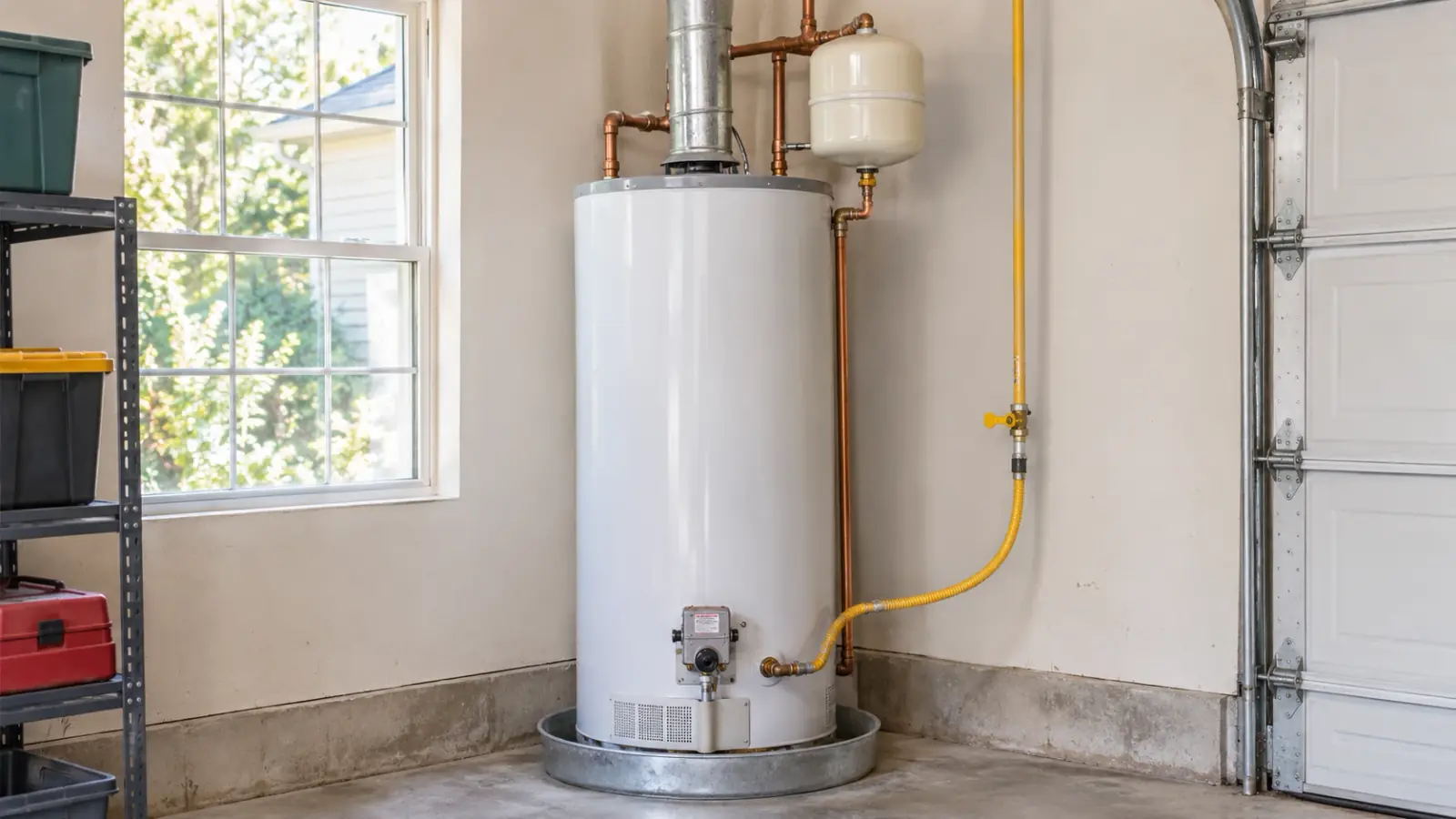
Water heater lifespan by type
| Type | Lasts | Source | Installed |
|---|---|---|---|
| Gas tank | About 10 years | NAHB | $1,700 |
| Electric tank | About 11 years | NAHB | $1,400 |
| Heat pump (hybrid) tank | About 13 years | ENERGY STAR | $3,400 |
| Gas tankless | 20 years or more | NAHB, ENERGY STAR | $2,850 |
Lifespans are typical figures, not promises. Prices from our calculator at national averages for a 50-gallon tank in an easy spot, replacing the same type; the heat pump is priced replacing an electric tank.
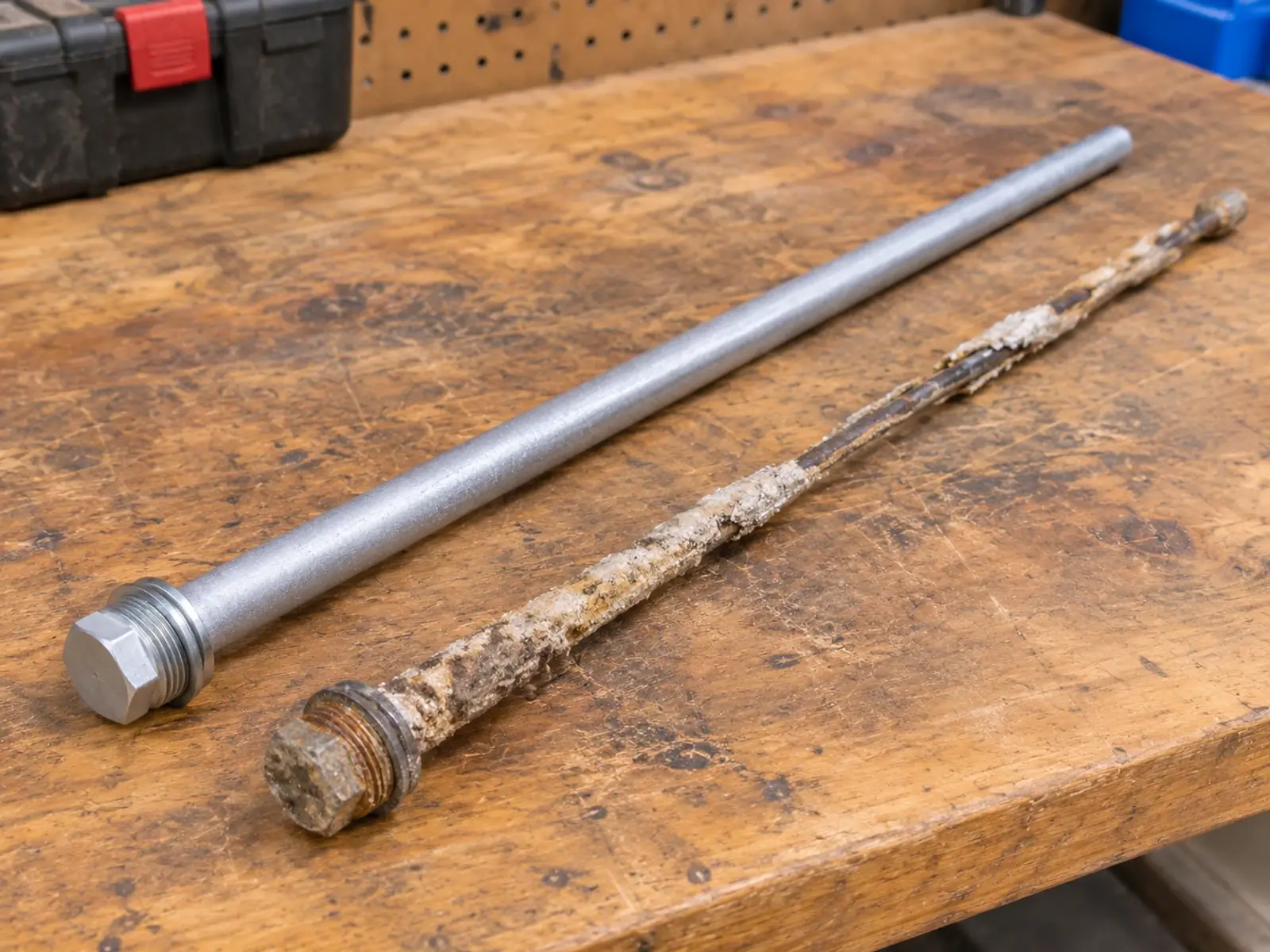
Tanks wear out because they hold water against steel all day. Each steel tank has an “anode rod” that corrodes in place of the tank; once it’s used up, the tank starts to rust from the inside. Hard water speeds this up, and so does sediment settling on the bottom. Tankless heaters have no tank to rust, which is a big part of why they last about twice as long.
How old is your water heater?
Look at the label on the side of the heater. Most makers code the month and year of manufacture into the serial number, often as letters and digits at the start. The maker’s website or customer line can decode it for you. If you bought the house, the home inspection report may list the heater’s age too.
Signs your water heater is failing
- Water on the floor around the tank. Check the pipe connections on top and the relief valve first: A. O. Smith says most leaks come from the water supply connections, which can be fixed. Water seeping from the tank body itself is different: a tank that has rusted through can’t be patched.
- Rusty or discolored hot water (but clear cold water). It can mean the anode rod is used up and the tank is corroding.
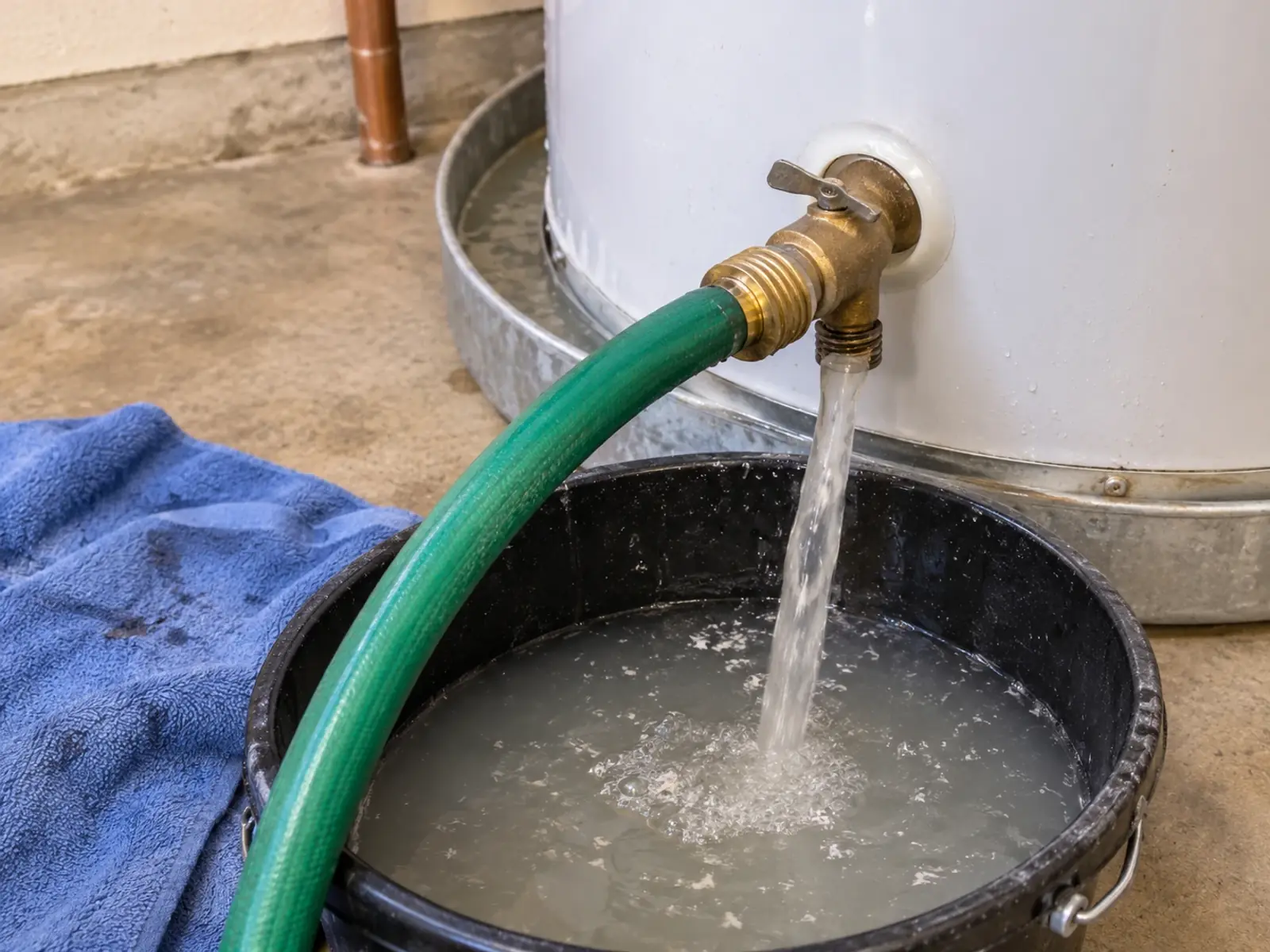
- Popping or rumbling as it heats. Usually sediment on the bottom of the tank. Flushing may help on a younger tank; on an old one it’s often a sign of wear.
- Less hot water than before, or water that’s only warm. On an electric heater, often a failed heating element or thermostat, which can be replaced.
- A dripping relief valve. A. O. Smith says this usually means the water pressure is too high or the system needs a thermal expansion tank, both of which a plumber can fix, rather than a failing heater.
- Age. A tank past 10 years with any of the above is near the end.
Repair or replace?
Our rule of thumb (a judgment, not a published standard): a heater under about 8 years old with one failed part, such as a heating element, thermostat, relief valve or anode rod, is usually worth repairing. A tank past 10 years that leaks from the tank itself or gives rusty water is worth replacing, and a tank whose body leaks needs replacing whatever its age. A new gas tank costs about $1,700 installed at national averages. Price yours with the water heater calculator, which covers every type and your state.
Replacing before it fails is worth considering. ENERGY STAR advises replacing an aging electric water heater before it fails; planned, you have time to compare quotes and types instead of taking whatever is in stock the day the tank leaks.
How to make a water heater last longer
A. O. Smith, one of the largest water heater makers, recommends these checks for tank heaters:
- Flush the tank at least once a year, more often with hard water, to clear sediment.
- Inspect the anode rod once a year and replace it when several inches of its core wire show. How fast it wears depends on your water, how much hot water you use, and whether you have a water softener.
- Test the relief valve once a year yourself, and have a professional inspect it every 5 years.
- Set the temperature to 120°F, the maker’s suggested setting.
Tankless heaters don’t need flushing, but many need descaling, especially in hard-water areas. Follow the owner’s manual for your model. If you’re not comfortable working around gas or electricity, A. O. Smith suggests calling a professional.
Replacing it? Consider an upgrade
A replacement is the cheapest moment to change type. ENERGY STAR estimates a certified heat pump water heater saves a household of four about $550 a year against a standard electric tank, paying back its extra cost in about three years on its assumption of about $1,500 extra. Our calculator puts one at about $3,400 replacing an electric tank, $2,000 more than a new electric tank, so on our prices the payback is nearer 3.5 years. A gas tankless heater lasts about twice as long as a tank but costs more to install, especially when it replaces a tank. Our guide tankless vs tank water heater works through the numbers.
Questions people ask
Can a water heater last 20 years?
A tankless one often can: about 20 years is the typical figure from ENERGY STAR and the NAHB. A few tank heaters do too, usually ones whose anode rod has been checked and replaced, but most tanks are near the end after 10 to 15 years.
Do electric water heaters last longer than gas?
Slightly: the NAHB puts electric tanks at about 11 years and gas at about 10. Electric heaters have no burner or flue, and their elements and thermostats can be replaced.
How long do tankless water heaters last?
About 20 years, according to ENERGY STAR and the NAHB, if they’re descaled as the maker recommends.
Sources and method
- NAHB / Bank of America Home Equity, Study of Life Expectancy of Home Components (February 2007) . Water heaters: electric 11 years, gas 10, tankless 20+
- ENERGY STAR, Save more with ENERGY STAR certified heat pump water heaters . A 13-year lifespan; about $550 a year saved by a household of four against a standard electric heater, paying back about $1,503 extra in about three years; advice to replace an aging heater before it fails
- ENERGY STAR, Save more with ENERGY STAR gas tankless water heaters . Tankless life expectancy of 20 years
- A. O. Smith (water heater maker), Water heater maintenance guide . Anode rod, relief valve and flushing advice; most leaks come from supply connections; a dripping relief valve usually means high pressure or thermal expansion
- Home Cost Estimates water heater calculators . Installed prices: national averages, 50-gallon tanks, an easy location
Built by Engr. Zakir Ullah, an engineer and Google-certified data analyst. Full method: how we estimate. Last reviewed .